Art Nouveau vs Art Deco Brooches: How to Tell the Difference
AVELIA STYLE GUIDE / BROOCH DESIGN
Is a butterfly brooch Art Nouveau or Art Deco? And how can you tell whether a vintage-looking crystal brooch belongs to a particular design tradition?
Both movements created extraordinary jewellery. Both used flowers, insects and sparkling details. Yet the way those elements are drawn and arranged can feel completely different.
ART NOUVEAU
Think flowing lines.
Curving stems, expressive wings, organic silhouettes and the feeling that a design is growing or moving.
ART DECO
Think deliberate structure.
Geometric outlines, fans, repeated stones, strong contrast and a clear sense of balance.
At AVELIA, we think the most useful way to understand these styles is to look at the brooch, not just its product name. How do the wings meet the body? Where does your eye travel? Is the composition organic, architectural or somewhere in between?
This visual guide uses examples from our Art Nouveau Brooches and Art Deco Brooches to help you recognise the differences, understand vintage terminology and choose a piece you will actually enjoy wearing.
Art Nouveau vs Art Deco Brooches: The Difference at a Glance
Art Nouveau flourished around the turn of the twentieth century, drawing strongly on the natural world. Art Deco became especially influential in the 1920s and 1930s, when modern design increasingly celebrated geometry, rhythm and contrast.
| Look for | Art Nouveau | Art Deco |
|---|---|---|
| Lines | Curved, sinuous, flowing | Angular, stepped, repeated |
| Composition | Organic and expressive | Structured, often symmetrical |
| Motifs | Vines, flowers, insects, flowing hair | Fans, sunbursts, bars, stylised natural forms |
| Visual details | Sculptural surfaces, translucent effects | Precise stone placement, bold contrast |
| Overall mood | Romantic, imaginative, nature-led | Graphic, glamorous, architectural |
These are useful tendencies, not rules for authenticating a historical piece. Both movements were diverse, and modern designs often combine influences.
What Makes a Brooch Art Nouveau?
The clearest clue is usually the way a design moves. Art Nouveau designers drew on plants, wings, waves and the human form, often turning them into flowing decorative lines rather than copying nature literally.
The famous whiplash curve is one expression of this approach: a sweeping line that bends and changes direction, as if it were a living stem or a lock of hair.
Look for movement, not simply a flower motif
In an Art Nouveau-inspired floral brooch, a stem might twist around a petal, or a bloom might tilt rather than sit neatly inside a fixed outline. These details can make jewellery feel almost sculptural.

Its blue enamel gives the piece colour, but the more revealing detail is how the stem, petals and pearl-like accent relate to one another. The shape leads; the embellishment follows.
Flowers are only part of the story
Butterflies, dragonflies, peacocks and female figures also became important subjects for historical Art Nouveau jewellery. They offered designers expressive wings, hair and flowing outlines, sometimes combined with enamel, glass and unusual natural materials.
For contemporary interpretations, explore AVELIA's Art Nouveau-inspired designs, including botanical and insect motifs with softer, more organic silhouettes.
What Makes a Brooch Art Deco?
Where Art Nouveau often follows a natural line, Art Deco tends to organise details around a visible structure. Think rectangular centres, fans, stepped outlines, carefully repeated crystals or radiating shapes.
The design can be lavish, but its ornament often feels controlled by a geometric plan.

Start with the central green crystal and follow the outline outwards. The angular framing and orderly clear stones keep drawing the eye back towards the centre. This is a useful example of an architectural composition.
Why fan-shaped brooches often feel Art Deco
A fan can turn the idea of movement into a simple geometry: a broad arc, a tapered base and radiating sections. The AVELIA Gold Art Deco Mother of Pearl Fan Brooch combines that recognisable outline with luminous mother-of-pearl and delicate crystal detailing.
The pearl-like drop softens the result, but the defining shape remains a geometric fan. This is a good reminder that Art Deco can be delicate as well as bold.
How to Tell the Difference: Four Visual Checks
If you are browsing a vintage market or looking at a brooch online, you do not need an art-history degree. Work through these four questions in order.
01 FOLLOW THE LINES
Do the main lines curl and unfold like stems or wings, or do they repeat as straight edges and angles? Flowing curves often suggest Art Nouveau; geometric repetition often suggests Art Deco.
02 FIND THE STRUCTURE
What holds the whole design together? An expressive natural form, or a clear central axis and architectural framework? A symmetrical butterfly alone is not proof of Art Deco.
03 STUDY THE MOTIF
Is nature represented with organic details, or simplified into regular decorative sections? A flower, dragonfly or butterfly may belong to either visual tradition.
04 EXAMINE THE DETAILS
Look at enamel, crystal placement, openwork and metal texture. These can support your judgement, but no single material identifies a movement or proves the piece's age.
AVELIA's tip: If several clues point in the same direction, you have a reasonable stylistic reading. You still have not authenticated the date, maker or materials of an antique.
The Same Motif, Two Design Languages
This is the part we find most useful when looking at real jewellery. A butterfly is not automatically Art Nouveau, and a dragonfly is not confined to one movement. The question is how the designer treats the subject.
Case Study 1: Two Butterfly Brooches
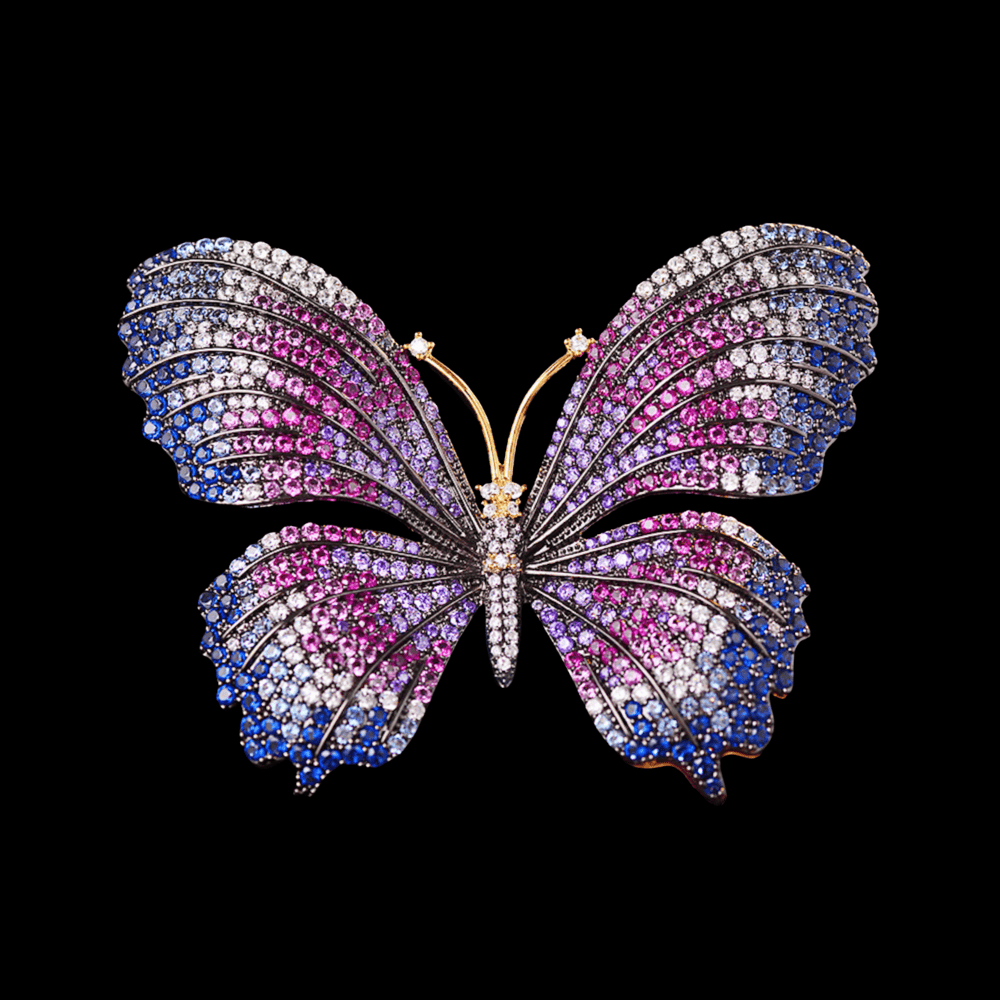
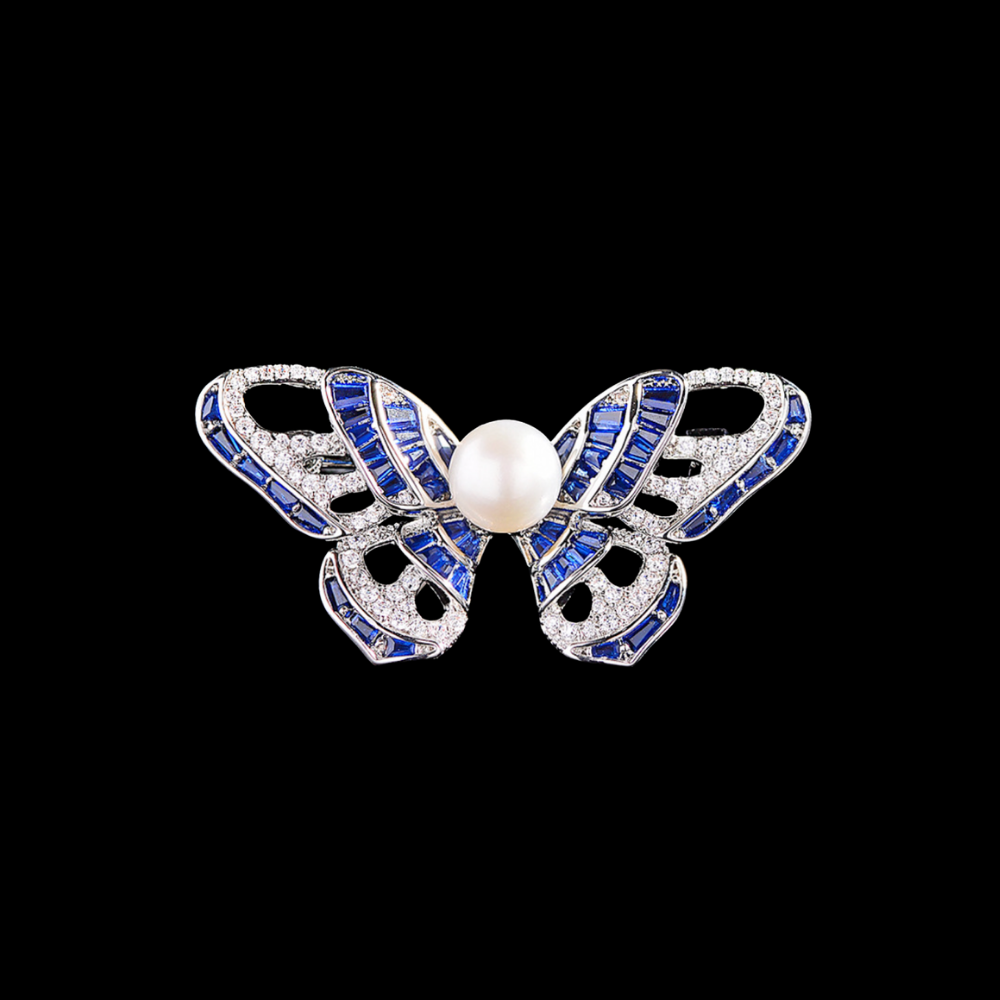
What to notice: the purple butterfly uses sweeping wing sections and colour transitions that give it an expressive, nature-led feeling. The silver-blue butterfly relies more on repeated rectangular stones, orderly openwork and a strong central pearl.
Both are contemporary pieces, not verified originals from either historical period. Their value here is that they show two different ways of designing the same subject.
Case Study 2: A Dragonfly Can Go Either Way
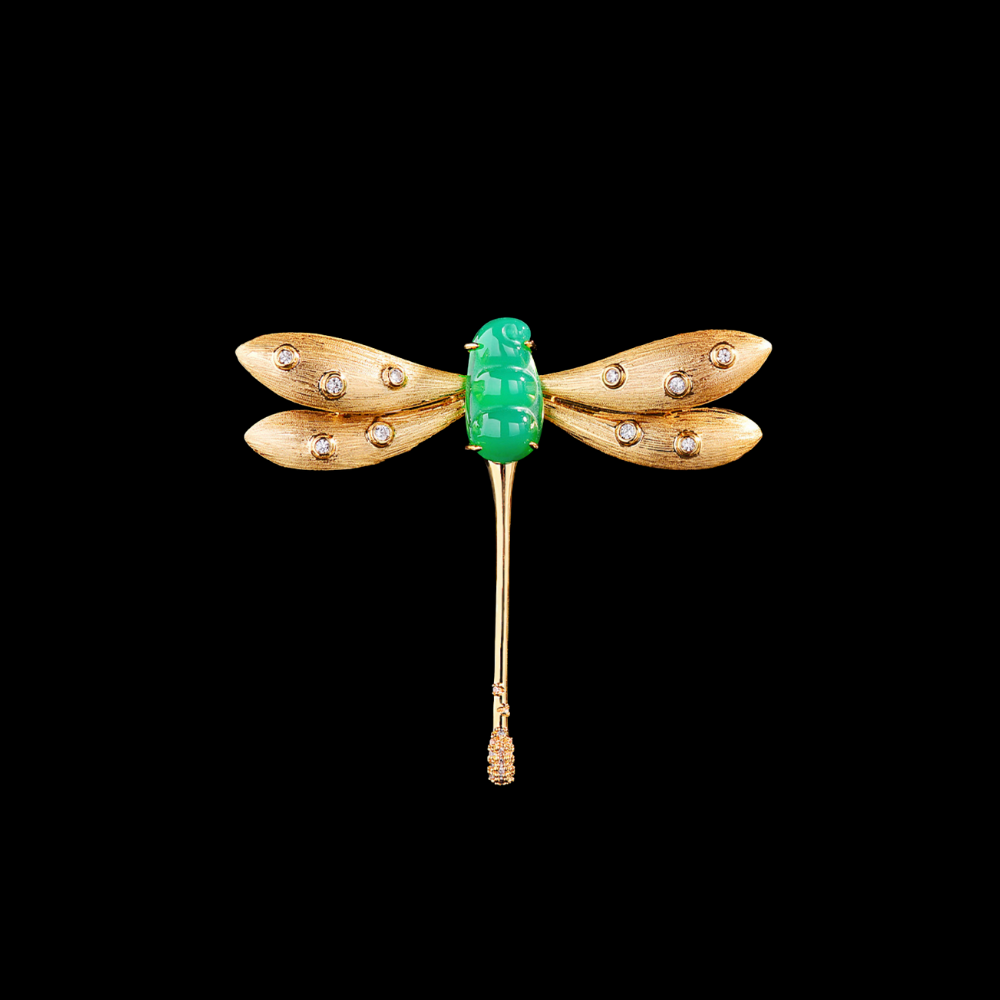

What to notice: the green dragonfly draws attention to its slender body and textured wings. The purple design is more theatrical: a rectangular red crystal anchors mirrored wings, with suspended crystals extending below.
The decisive clue is not the presence of crystals. It is how the centre and surrounding decoration are organised.
Case Study 3: Orchid Petals vs a Geometric Fan
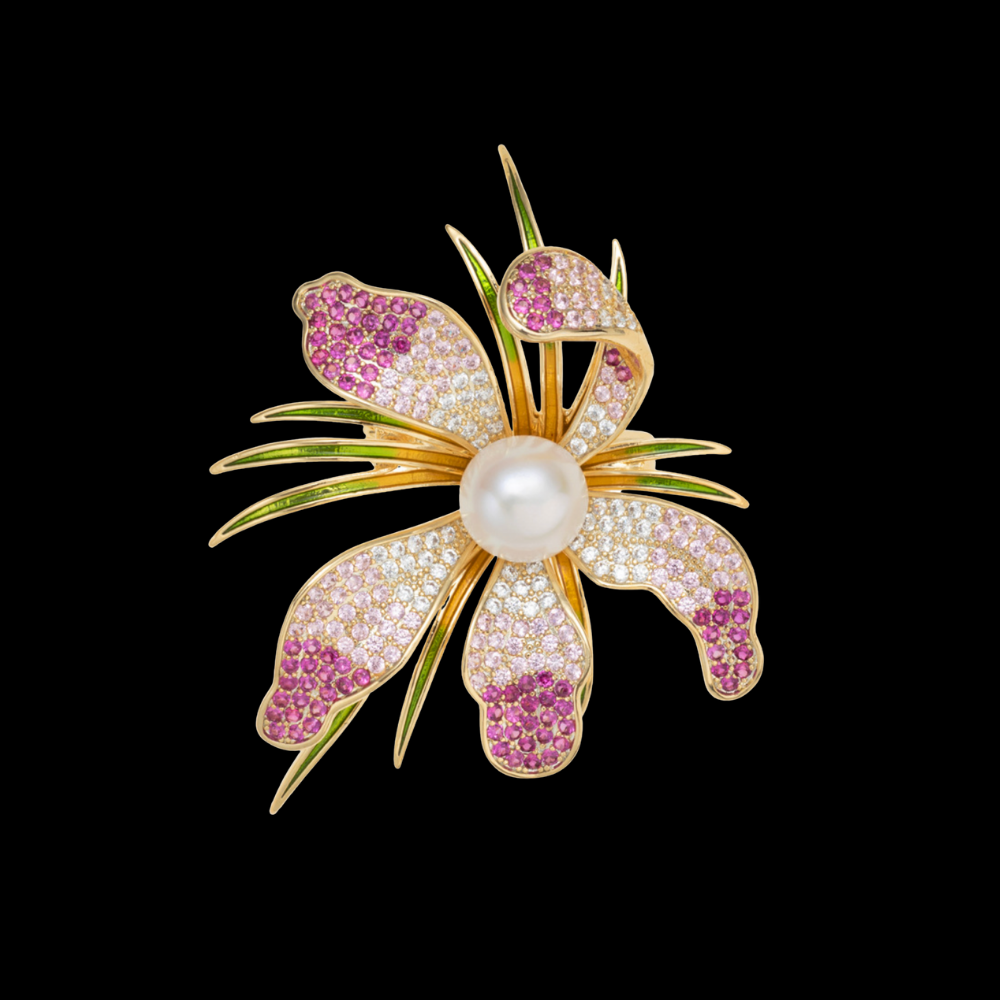
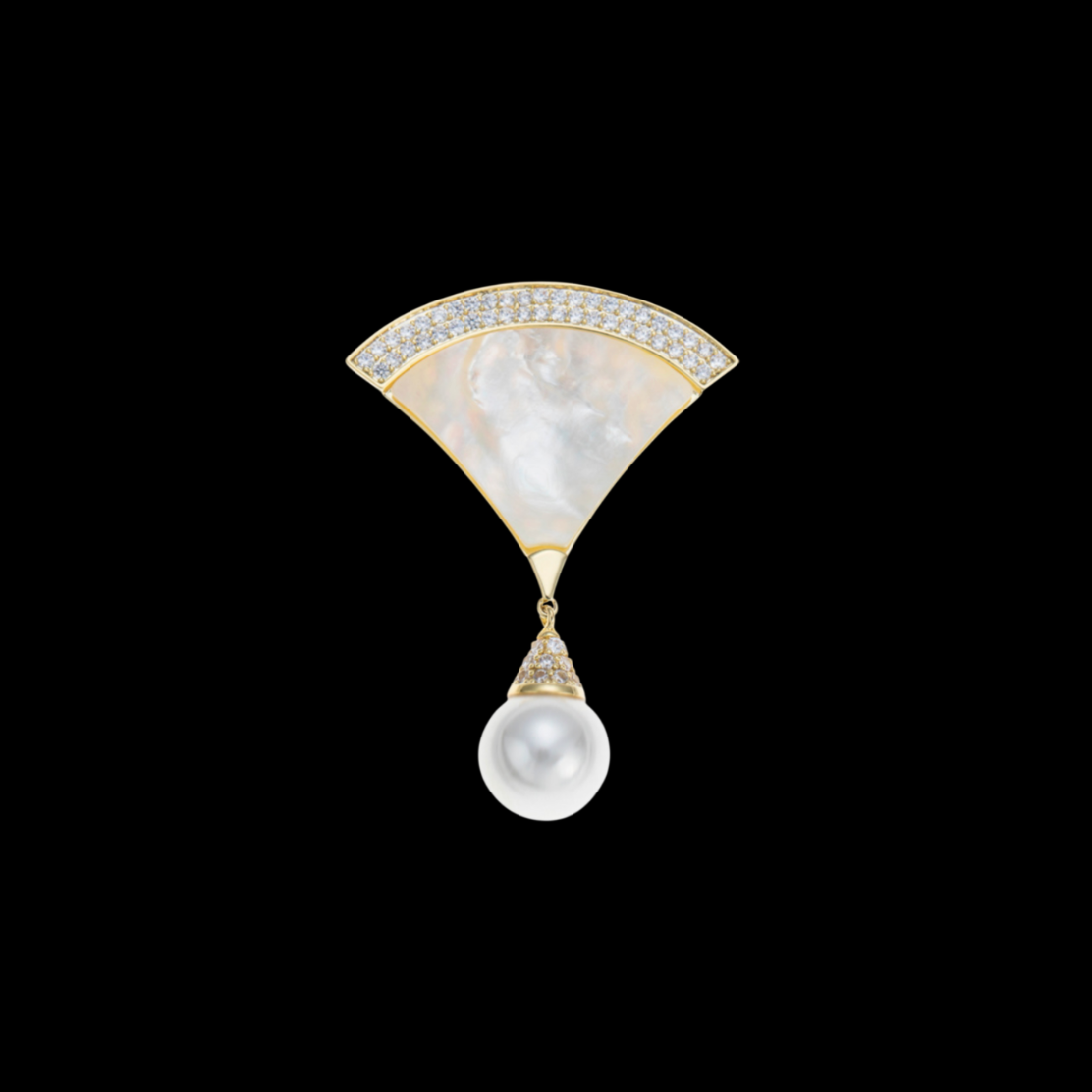
What to notice: the orchid follows an irregular arrangement of petals and leaves, while the fan concentrates attention on a broad, recognisable outline. Both contain luminous accents, but the silhouette tells a stronger story than the stones.
Antique, Vintage and Vintage-Inspired: What Do They Actually Mean?
These words are often mixed together in online listings, but they answer different questions. Art Nouveau and Art Deco describe design traditions; antique and vintage describe age.
Antique
Often used for objects at least 100 years old, although definitions vary by market and context. A genuine Art Nouveau brooch made around 1900 may be antique.
Vintage
Generally means an older piece from a previous period. There is no single globally applied age threshold for all jewellery sellers.
Vintage-inspired
A newly made piece that draws on the shapes or ornament of earlier eras. Many AVELIA pieces fall into this category rather than being period antiques.
If you are buying an item sold as an antique Art Deco brooch, ask the seller what supports the claimed date. Photographs of a geometric front are not enough to prove that a piece was manufactured in the 1920s or 1930s.
A practical checklist for antique buyers
- Ask about provenance: does the seller have documented history or a credible attribution?
- Examine the back: pin fittings, hinges, soldering and repairs offer clues, but individual clasp types are not decisive.
- Check marks carefully: hallmarks and maker's marks should be interpreted in context.
- Confirm materials: a clear crystal is not a diamond, and an emerald-coloured stone is not necessarily an emerald.
- Ask about restoration: replacement stones and repaired fittings may affect condition and value.
For a valuable antique, an independent specialist assessment may be appropriate. A design style is not an authenticity certificate.
Does the Material Tell You the Style?
Material is part of the story, but rarely the whole answer. Historical Art Nouveau jewellers used enamel and expressive surfaces in inventive ways; Art Deco jewellers often created graphic effects through gemstone placement and contrast. Both movements worked across a range of materials.
Silver Art Nouveau brooches
If you are looking for a silver Art Nouveau brooch, focus on the sculptural treatment of lines and shapes. Silver, sterling silver and silver-tone base metal are not interchangeable terms, so always check the actual specification.
Art Deco diamond brooches and crystal designs
Historical diamond jewellery helped define some of the most glamorous Art Deco looks. Modern crystal settings can evoke a similar visual rhythm without being diamond jewellery. The AVELIA Art Deco Green Crystal Bar Brooch shows how repeated clear stones and green accents create a balanced composition.
Enamel and mother of pearl
Neither belongs exclusively to one style. The real question is whether the material follows a flowing natural silhouette or sits within a more geometric arrangement.
Which Style Should You Choose for Your Wardrobe?
Once you can see the visual difference, choosing is less about getting a label 'right' and more about choosing the effect you want.
Choose Art Nouveau for...
- Fluid shapes and nature-inspired details
- Flowers, wings and sculptural outlines
- Soft knitwear, silk, romantic or relaxed outfits
Try a Vintage Orchid Brooch on a cream cardigan or a Green Dragonfly Brooch on a dark lapel.
Choose Art Deco for...
- Clear geometry and controlled sparkle
- Fans, bars and strong focal points
- Blazers, coats and streamlined eveningwear
Try the Mother of Pearl Fan Brooch on a jacket or the Green Crystal Bar Brooch against black tailoring.
There is no need to keep the styles separate in a modern wardrobe. A flowing floral pin can soften a sharply tailored blazer; a geometric brooch can bring contrast to a fluid silk scarf. Consider fabric strength and pin placement when wearing heavier pieces.
Where to Wear Each Style
- Blazer lapel: a compact geometric bar or a medium botanical pin offers a clear focal point.
- Wool coat: larger butterflies, dragonflies or crystal-rich pieces often show up best against the heavier fabric.
- Silk scarf: test the fastening and weight carefully; a traditional pin may leave visible marks in fine silk.
- Wedding guest outfit: a mother-of-pearl fan, floral brooch or restrained crystal design can replace a statement necklace.
- Eveningwear: choose precise Art Deco sparkle for a graphic look or an expressive Art Nouveau-inspired motif for colour and movement.
In the UK and Canada, wool coats and layered outfits offer useful places for brooches; in warmer climates in the US and Australia, lightweight jackets and dresses may be more practical. The best pairing depends on the garment, not the country.
Frequently Asked Questions
What is the main difference between Art Nouveau and Art Deco brooches?
Art Nouveau typically emphasises flowing organic forms; Art Deco tends towards geometry, repetition and structured contrast. Both can depict nature, so the design treatment matters more than the subject.
How can I tell if a brooch is Art Deco?
Look for geometric frameworks, fan or stepped shapes, repeated stone patterns and balanced compositions. These are stylistic clues, not proof of the manufacturing date.
Are butterfly brooches Art Nouveau or Art Deco?
Either. Flowing wing details may suggest Art Nouveau, while repeated geometric settings may suggest Art Deco. Look beyond the butterfly shape.
What is an Art Nouveau lady brooch?
It usually describes jewellery depicting a female face or figure, sometimes with flowing hair, flowers or wings, in a style associated with Art Nouveau.
Is every silver Art Nouveau brooch sterling silver?
No. Silver may describe a colour or surface finish. Check whether the piece is sterling silver, silver plated or silver-tone metal.
Does vintage-inspired mean antique?
No. Vintage-inspired describes a contemporary piece influenced by historical design. Antique refers to age; a modern Art Deco-style brooch is not necessarily a period original.
Look Beyond the Motif
The next time a butterfly, dragonfly or crystal brooch catches your eye, take a second look. Follow the lines. Notice the outline. Ask whether the details feel as if they are growing naturally or have been placed into a deliberate structure.
That small shift in how you look at jewellery makes it easier to recognise influences — and, more importantly, discover which pieces feel right for you.
Explore AVELIA's Art Nouveau Brooches for expressive, nature-led designs, or discover our Art Deco Brooches for geometry, symmetry and structured sparkle.
For more historical context, see the Victoria and Albert Museum's resources on Art Nouveau, the whiplash curve and jewellery history.